
Last updated: March 2026
 About the Author
Mina Lucks, Founder & CEO of the award-winning design build firm, Synergy Design & Construction, leads with the belief that your home should support the way you live each day. She guides homeowners through a thoughtful, fully integrated home remodeling process designed to bring clarity, ease, and a lasting impact to their space.
If you’ve ever felt torn between a classic, traditional kitchen and something more modern, you’re not alone. This is exactly where transitional kitchen design comes in, and why it has become one of the most popular kitchen design styles in homes today.
You’ve likely seen the term used across design platforms and inspiration boards, but many homeowners still find themselves asking the same question: What does transitional design mean? And more importantly, how can I incorporate transitional design in my kitchen?
At Synergy, we guide homeowners through these decisions every day. Transitional design isn’t about meeting in the middle of multiple different design ideas. It’s about creating a space that feels balanced, intentional, and supportive of how you live. When done well, it brings clarity to the design process and results in a kitchen remodel that feels just right for your home.
What Is Transitional Kitchen Design?
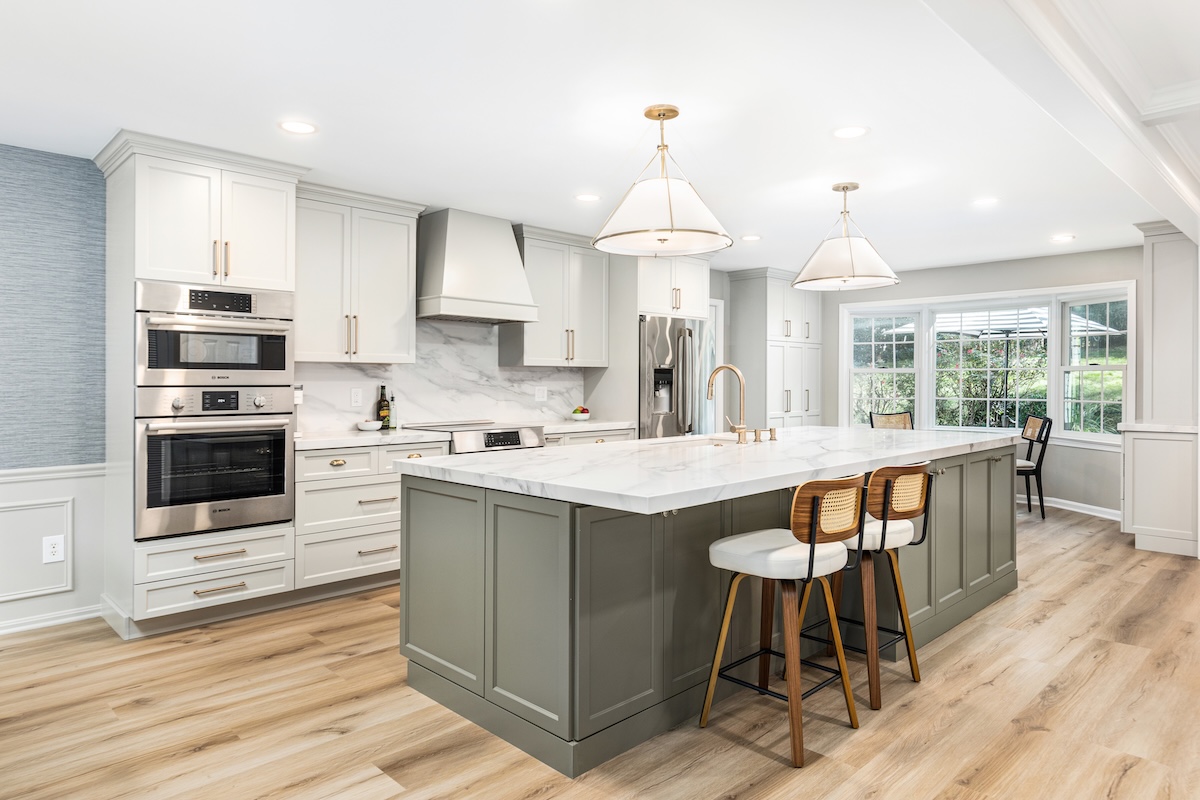
At its core, transitional kitchen design blends traditional and contemporary design elements in a way that feels clean, cohesive, and timeless.
It brings together the warmth and familiarity of traditional design with the simplicity and functionality of modern design without allowing either style to dominate. The result is a kitchen redesign that feels updated, comfortable, and structured.
What makes transitional design especially unique is its ability to adapt. Instead of being tied to a specific design era or trend, it focuses on balance and proportion. This allows the space to evolve over time without needing a complete overhaul.
This kitchen design approach works well in homes with traditional-style architecture, where homeowners want to introduce a more contemporary feel without losing the character of the space. It also gives a sense of continuity, ensuring that the kitchen feels connected to the rest of the home.
Why Homeowners Are Choosing Transitional Kitchens
One of the reasons transitional design continues to be at the top of every homeowner’s kitchen renovation list is the flexibility. Rather than locking you into a specific design direction, transitional style offers a lasting approach.
A transitional kitchen appeals to a broader range of tastes, which can be especially valuable for those thinking about long-term resale. Buyers are more likely to connect with a space that feels balanced and approachable rather than highly stylized or trend-specific.
Beyond resale, homeowners appreciate the sense of ease this style creates. Transitional kitchens don’t demand constant updates to stay relevant. Instead, they provide a design foundation that can be refreshed over time through smaller changes like lighting, hardware, or home décor.
There’s also a practical benefit. Because transitional design prioritizes both form and function, it supports the way people actually live. It encourages thoughtful layouts, efficient storage, and materials that perform well in everyday use, making it just as livable as it is visually appealing.
What Transitional Design Avoids

Understanding transitional design starts with recognizing what it generally leaves behind.
You won’t find heavy ornamentation or intricate detailing that can make a space feel overly formal or dated. Elements like elaborate moulding, decorative corbels, or overly ornate cabinetry are typically minimized or removed altogether.
At the same time, transitional design avoids the stark minimalism that can sometimes make modern kitchens feel cold or impersonal. It steers clear of overly glossy finishes, harsh contrasts, and designs that prioritize appearance.
Instead, transitional kitchens focus on clean lines, simplicity, and a sense of openness. Every element is chosen with intention, creating a space that feels calm, welcoming, and easy to navigate.
Cabinetry & Color: Building a Flexible Foundation

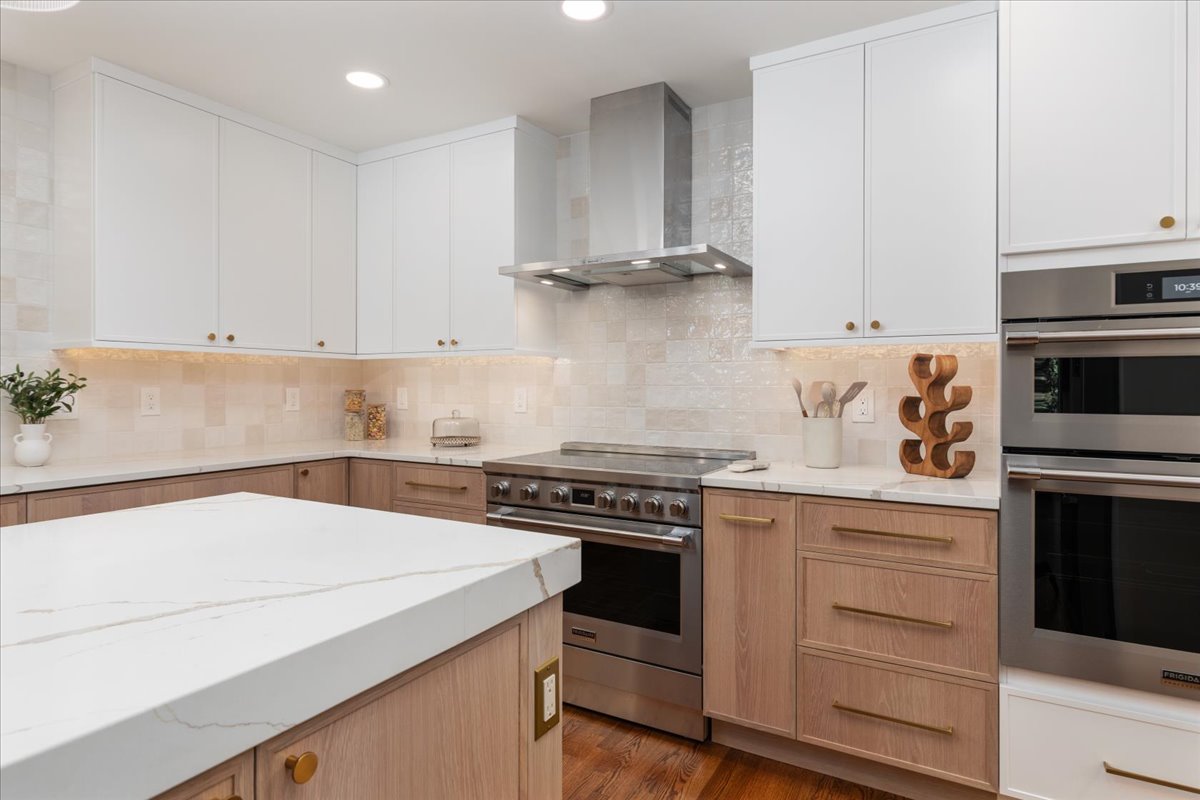
Cabinetry is one of the most defining design elements of a transitional kitchen, and it typically leans toward simplicity. Clean-lined styles like shaker or slightly updated cabinets create a bridge between traditional and modern aesthetics without overwhelming the space. The goal is to create a design foundation that feels structured but not overly detailed. Kitchen cabinet doors feature subtle profiles rather than elaborate designs, allowing other elements in the kitchen to stand out without competing.
Color plays an important role, too. Most transitional kitchens are built on a neutral palette, using tones like soft whites, warm beiges, gentle grays, or muted blues. These colors create a sense of calm while also providing flexibility for future updates. In many cases, homeowners choose to incorporate contrast through two-tone cabinetry. A darker island paired with lighter cabinets can add depth and dimension, helping the space feel more dynamic.
This design style also supports longevity. A neutral foundation makes it easier to update in the future, whether that means swapping out hardware, introducing a new backsplash, or adjusting the overall styling of the space.
Functionality is just as important as appearance. Transitional kitchens incorporate kitchen storage solutions, such as deep drawers, pull-out pantry systems, and integrated organizational features. These details may not always be visible at first glance, but they play an important role in how the kitchen performs day to day.
Kitchen Materials, Finishes & Fixtures
Another important characteristic of transitional kitchens is the way materials are layered together. Instead of focusing on a single finish or material, the design incorporates a mixture.
This can look like combining different metal finishes, allowing kitchen fixtures and hardware to complement each other instead of matching exactly. For example, you might see a brushed nickel faucet paired with matte black lighting or warm-toned hardware. These combinations add interest to the overall kitchen design without it feeling disjointed.
Transitional kitchen finishes tend to look softer and feel more approachable. Matte and brushed textures are commonly used to reduce glare and create a more comfortable visual experience.
Kitchen backsplashes are treated as an opportunity to incorporate subtle detail. While subway tile remains a popular and timeless option, it can be elevated through pattern, scale, or grout contrast. In some cases, homeowners might choose a more distinctive material, but it’s used in a way that supports the overall design.
Kitchen countertop selections also play an important role. Materials like quartz or natural stone are selected for their durability and understated beauty. The focus is on surfaces that not only look good but also perform well under daily use.
Kitchen Flooring Choices That Support the Space
Kitchen flooring in a transitional kitchen focuses on supporting continuity throughout the home.
Hardwood flooring is a common choice because it creates a seamless connection between the kitchen and adjacent living areas. This helps unify the space and reinforces the open, connected feel that many homeowners are looking for.
Kitchen tile can also be a popular option, particularly when durability is a priority. Larger format tiles or those with subtle textures maintain the clean, uncluttered aesthetic common with transitional design.
Highly detailed or small-scale patterns are generally avoided, as they can introduce visual noise and disrupt the overall flow of the space.
Kitchen Lighting for Transitional Design
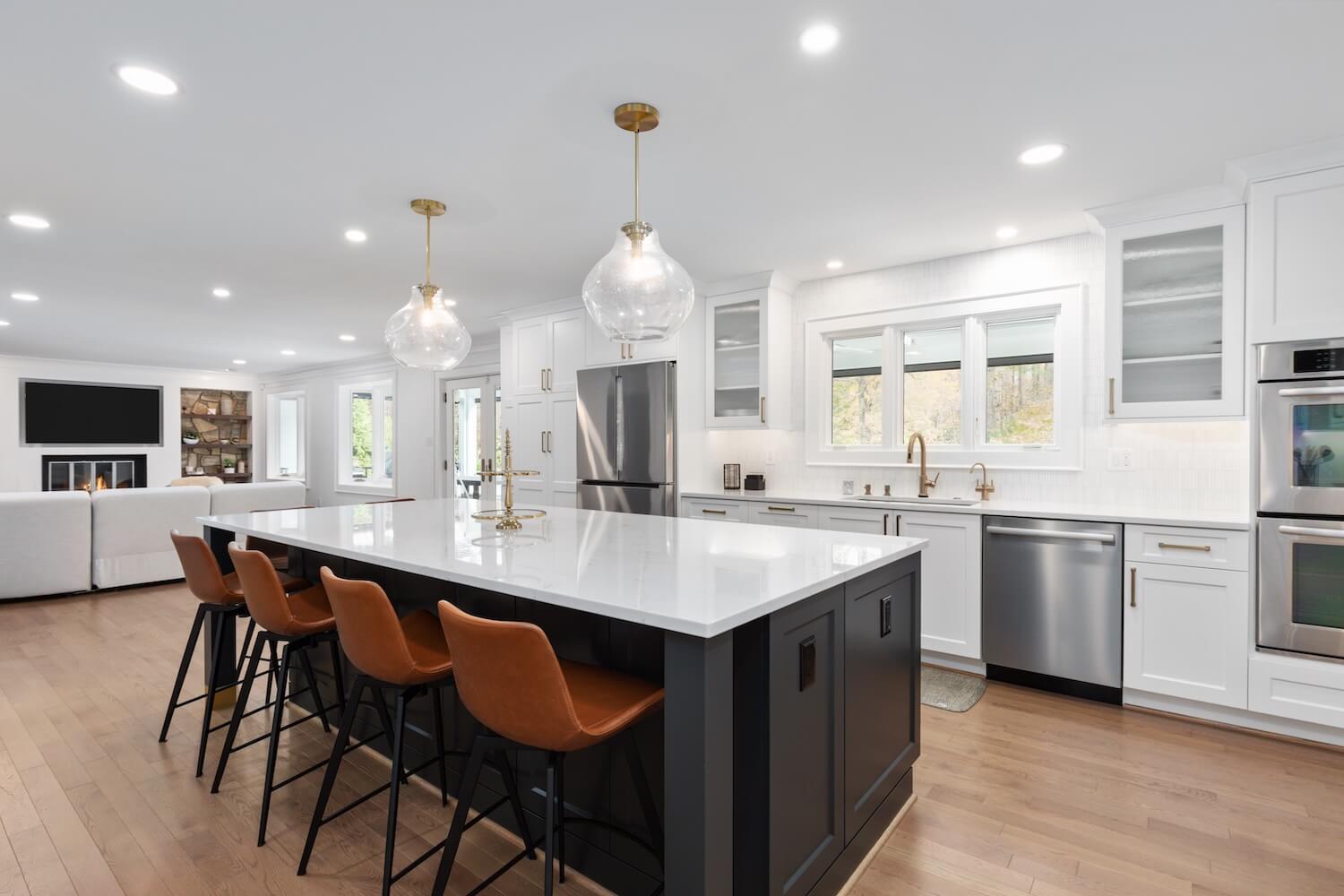
Kitchen lighting is one of the most flexible design elements within a transitional kitchen and offers an opportunity to introduce a bit more personality into the space.
Because transitional design is grounded in neutrality, lighting fixtures can lean slightly more expressive without feeling out of place. Whether that means incorporating a modern pendant, an industrial-inspired fixture, or something with a more classic silhouette, lighting can help define the character of the kitchen.
Recessed lighting provides a great source of light, while under-cabinet lighting adds a practical layer, improving visibility for everyday tasks while also creating a subtle ambient glow. Statement fixtures, particularly over kitchen islands or dining areas, act as focal points. These elements help anchor the design and provide an opportunity to introduce contrast or visual interest. When thoughtfully planned, lighting enhances both the functionality and atmosphere of the kitchen, making it feel more complete.
Kitchen Layout & Flow
While aesthetics are important, the success of a transitional kitchen ultimately comes down to how it functions. Many homeowners are prioritizing open layouts that allow the kitchen to connect more naturally with surrounding spaces. This not only improves flow but also supports the way people gather, cook, and spend time together. A well-designed layout considers how you move through the space, where you need storage, and how different zones, like cooking, prep, and entertaining, interact with each other.
At Synergy, we begin every project by understanding how our clients live in their homes. This helps us design kitchens that are not only visually cohesive but also highly functional.
How to Design a Transitional Kitchen in Reston, Virginia
One of the most common misconceptions about transitional design is that it simply involves mixing different styles. In reality, achieving the right balance requires intention. Every decision should contribute to a unified vision, ensuring the space feels cohesive instead of pieced together. Choosing where to introduce contrast, where to keep things simple, and how to maintain consistency across materials and finishes all play a role in the final outcome of the kitchen renovation.
That’s where working through a structured design process can make all the difference. At Synergy Design & Construction, we guide homeowners through each step, helping them make informed decisions that align with both their aesthetic preferences and their day-to-day needs.
Ready to remodel your kitchen? Visit our website to learn more and schedule your consultation. Our team is here to guide you every step of the way.
