
Last updated: March 2026
 About the Author
Mina Lucks, Founder & CEO of the award-winning design build firm, Synergy Design & Construction, leads with the belief that your home should support the way you live each day. She guides homeowners through a thoughtful, fully integrated basement remodeling process designed to bring clarity, ease, and a lasting impact to their space.
Basements are one of the most overlooked areas of a home, yet they hold some of the greatest potential.
For many homeowners, the basement becomes a place for storage, boxes stacked in corners, and unused furniture, making it feel disconnected from the rest of the home. But when approached with intention, it can become one of the most valuable and versatile areas you have. Remodeling your basement is an opportunity to expand how your home supports you day to day, without changing your home’s footprint.
A well-designed basement can create room for gathering, relaxing, working, and hosting. It can offer privacy for guests, space for growing families, or simply a place to unwind at the end of the day. And beyond how it feels to live in, a finished basement can also contribute to the long-term value of your home.
If you’re considering a basement remodel, here are a few things to keep in mind to ensure a successful remodeling experience.
Basement Remodeling Ideas and Rethinking Your Space
Whether your basement is unfinished or simply outdated, the first step isn’t choosing finishes or layouts, it’s shifting how you see the space. An unfinished basement, with exposed framing, concrete floors, and minimal lighting, is seen as a project to “get through one day.” In reality, it’s a blank canvas that offers an exciting opportunity to design something perfect for your home from the ground up.
Even finished basements can fall short. Many were designed as one large, undefined room or built around trends that no longer reflect how families use their homes today. In those cases, a basement renovation is an ideal way to rework the space so it finally makes sense for those in the home.
In both scenarios, the goal is the same: to reclaim square footage that already exists and turn it into something meaningful. Instead of asking, “How do we finish the basement?” a better question is, “What role do we want this space to play in our home?”
Benefits of a Finished Basement
Transforming your basement is one of the most effective ways to increase both the usability and value of your home, but the true return goes beyond numbers. It creates a space that supports your life in a way your home couldn’t before by adding livable space without building an addition.
Within the existing footprint of your home, a basement can support a wide range of functions. It can become a private guest suite with a bedroom and bathroom, giving visitors their own space while maintaining privacy upstairs. It can serve as a media room or gathering space where family and friends can come together comfortably. For some, it becomes a quiet home office or a place for focused work. For others, it’s a combination of several needs, thoughtfully integrated into one cohesive design.
This flexibility is what makes basement remodeling so impactful. Instead of forcing your lifestyle into the constraints of your current layout, you’re shaping your home to better support how you actually live.
Home Remodeling Features: Must-Have vs Nice-to-Have
Before getting into layouts, finishes, or decor, it’s important to establish clarity around priorities. One of the most effective ways to do this is by breaking your basement design ideas into three categories: what you need, what would be nice to have, and what would feel like a true upgrade.
Your “must-haves” are the design elements that make the space functional. This might include a bedroom for guests, a bathroom for convenience, or a defined living area for everyday use.
Your “nice-to-haves” are the basement design features that enhance how the space is used. A wet bar, built-in shelving, or a designated game area can make the basement more enjoyable and easier to use regularly.
Then there are the “pinch me” features, or in other words, the basement upgrades that elevate the overall basement experience. These could be custom cabinetry, integrated lighting, or a fully designed entertainment space that feels like an extension of the main level.
Organizing your basement remodel ideas this way helps guide decisions throughout the process. It ensures that the most important elements are prioritized, while still leaving room for thoughtful upgrades where they matter most.
Basement Layout Considerations
One of the most common challenges in basement remodeling is creating a layout that feels intentional. Instead of designing the basement as a single large open room, it’s more effective to think in terms of zones. Each area serves a purpose, but they’re connected in a way that feels cohesive.
For example, a basement might include a central gathering space anchored by a media area, with a nearby bar that supports entertaining. Off to one side, a quieter workspace or reading area provides separation without isolation. A guest suite can be tucked away to offer privacy, while still feeling integrated into the overall basement redesign.
This approach allows the space to support multiple uses without feeling cluttered or undefined. It also creates a more natural flow, making the basement feel like a true extension of the home in a way that makes sense for your specific needs.
Key Basement Design and Construction Elements
While layout and function are foundational, the details are what ultimately bring the updated space together.
A finished basement involves more than adding walls and flooring. It requires careful consideration of lighting, ceiling treatments, and how mechanical systems are integrated into the design. Extending HVAC systems ensures the space is comfortable year-round, while thoughtful lighting design can transform what might otherwise feel like a lower-level space into something warm and inviting.
Basement storage solutions are another key factor. Built-in storage can help maintain a clean, organized look while supporting everyday use. And when done well, these details don’t just serve a function, they enhance how the space feels.
How to Transform an Underutilized Basement
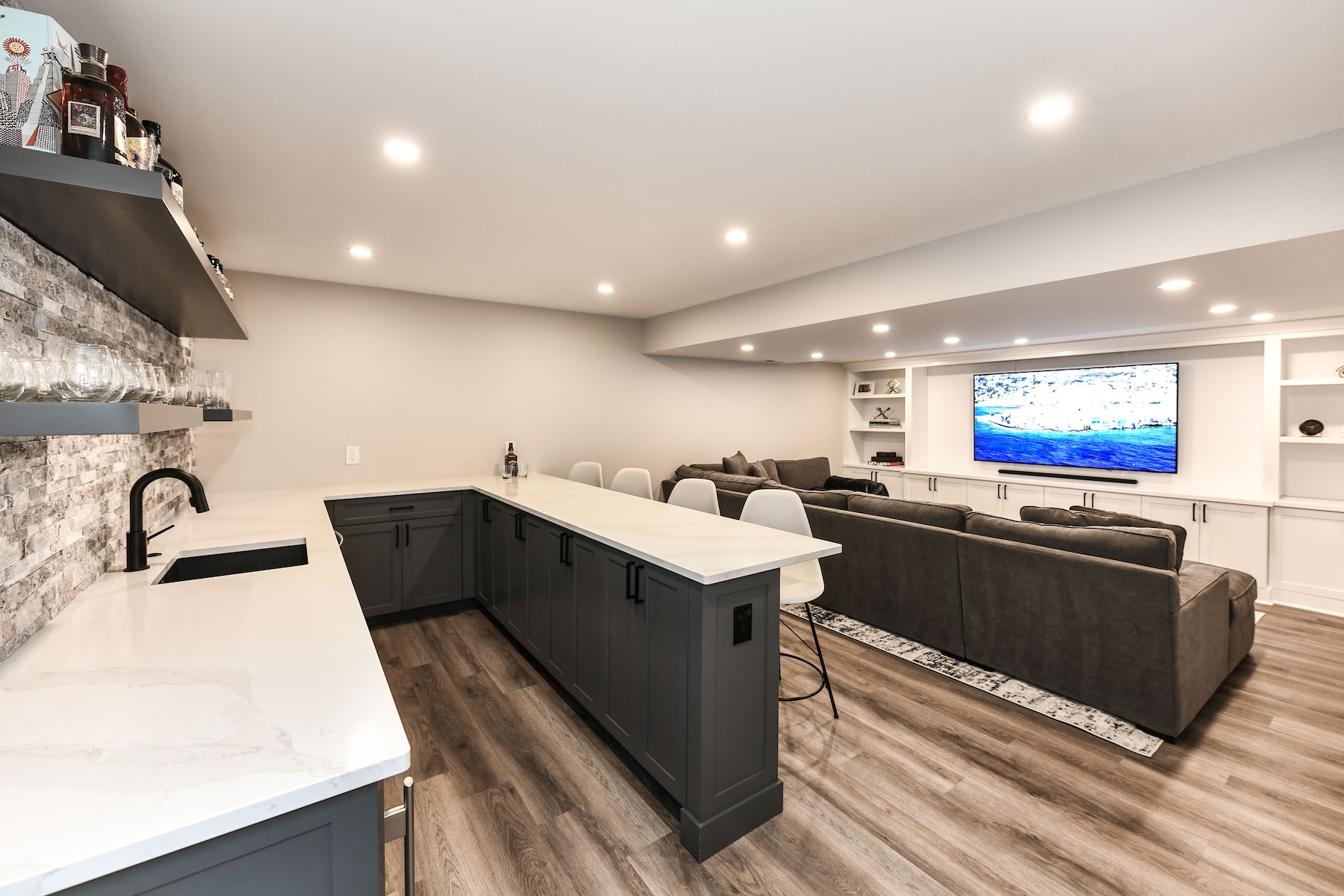
In a recent basement remodeling project in Vienna, Virginia, a family came to us with a basement that technically had everything they would want: a recreation room, a guest suite, and a large storage area. But it wasn’t working for how they lived. The space felt disconnected, and much of it went unused and ignored.
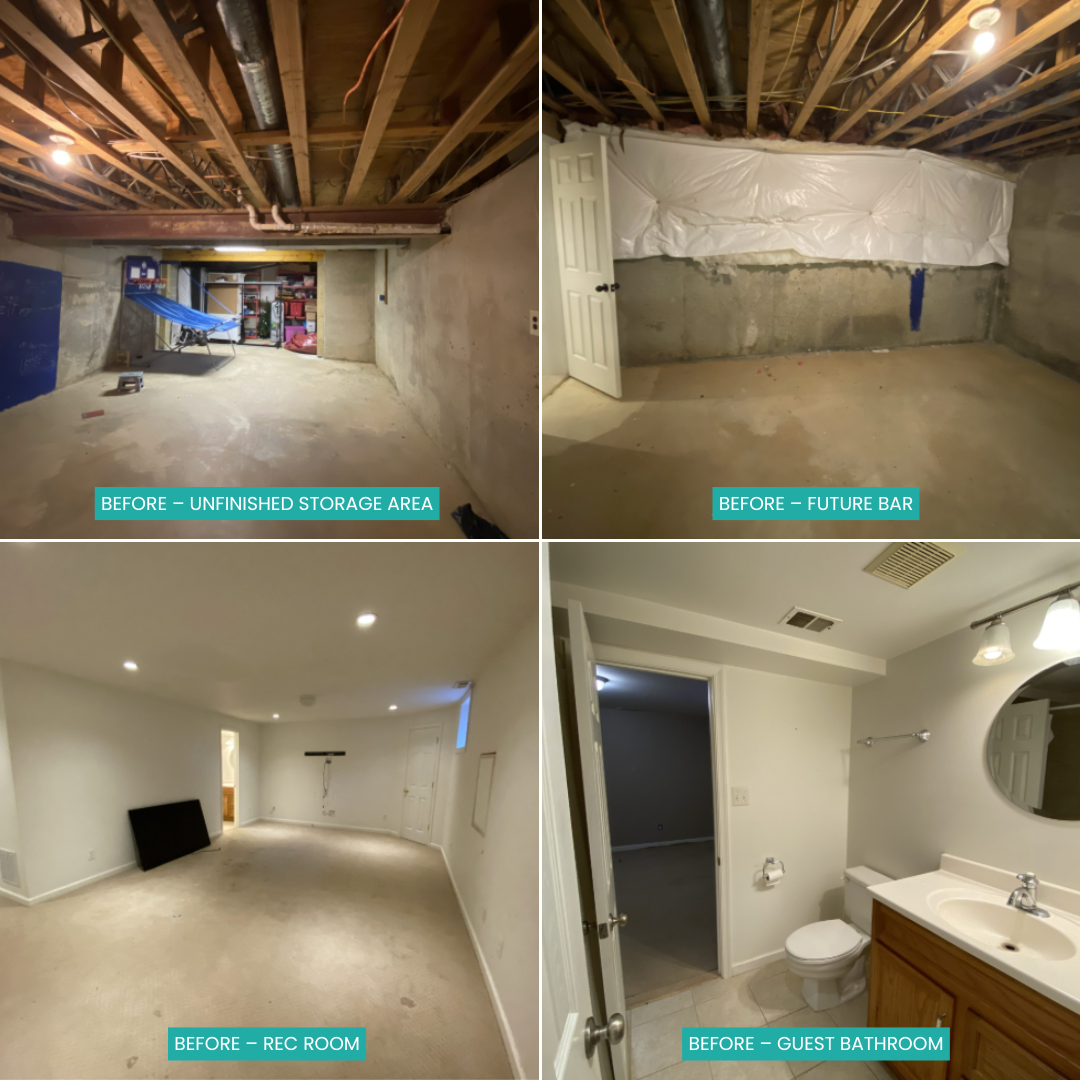
Throughout the design process, our design build team shifted the focus from simply finishing the remaining space to reimagining how the entire basement could function as a whole. The result was a series of clearly defined zones that worked together seamlessly.
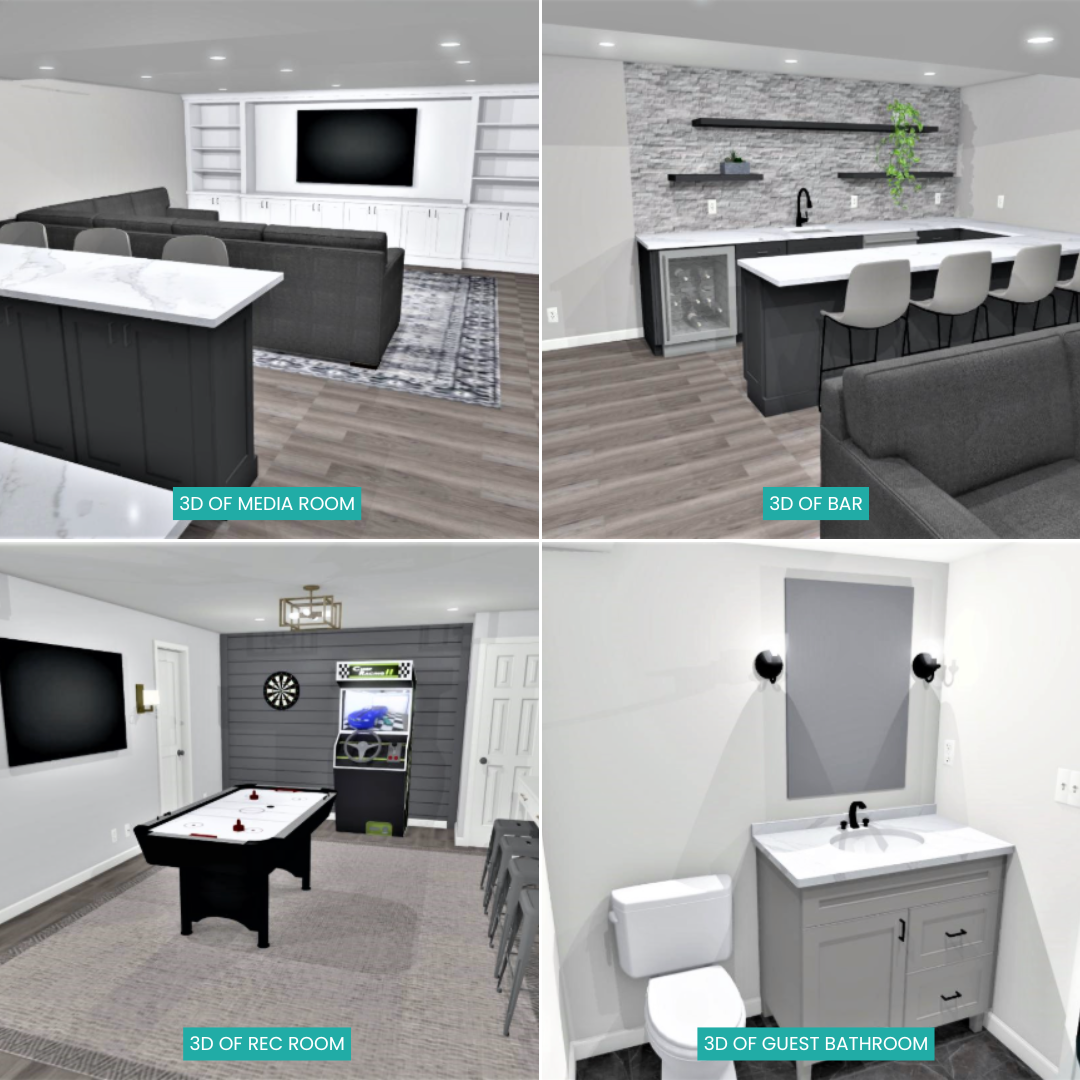
The updated basement design included a central TV area and recreation space for everyday use, a bar that made for a perfect entertaining space, and a game area that encouraged interaction. A workspace was integrated in a way that felt separate but still connected, and the guest suite was refined to provide comfort and privacy. An egress window was also added, improving both safety and natural light.
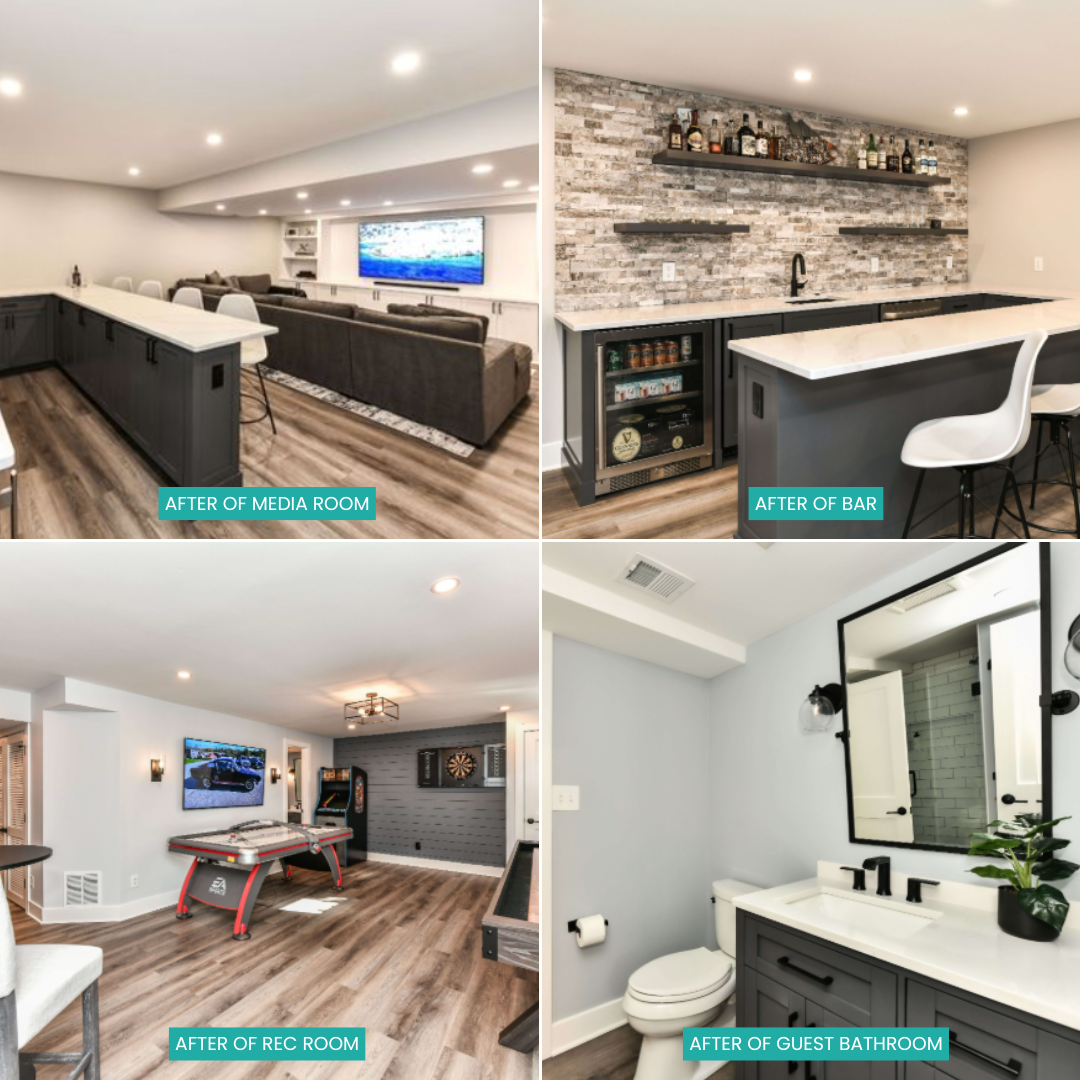
What made the biggest difference wasn’t just the addition of new features. It was the way the basement was completely restructured to support real-life use.
How to Choose a Design Build Contractor for Your Basement Remodel
As you move from planning for a basement remodel to executing the renovation, one of the most important decisions is determining which design build contractor to partner with.
For complex basement updates that involve reconfiguring layouts, adding plumbing, or integrating multiple functions into one cohesive design, working with a trusted design build firm becomes especially valuable.
Instead of managing separate teams for design and construction, a full-service design build company works as a single, integrated team from start to finish. This creates a more cohesive and stress-free remodeling process, where decisions are made with both design intent and construction realities in mind. It reduces the risk of miscommunication, helps keep the project aligned with your goals, and allows for a smoother overall experience.
For homeowners, this creates more clarity, fewer surprises, and a final remodel result that feels intentional.
Remodeling Your Basement in Northern Virginia
Remodeling a basement isn’t just about finishing a lower level, it’s about unlocking potential that’s already there. With the right planning, a clear understanding of priorities, and a design that reflects how you actually live, your basement can become one of the most meaningful spaces in your home.
And when the process is guided with intention, the result isn’t just a better basement, it’s a home that works better as a whole. Ready to remodel your basement? Visit our website to learn more and schedule your consultation. Our team is here to guide you every step of the way.
